A manufacturer gets an important contract. While the requirements for monthly production have increased, the factory does not have an increase in flooring or experienced workers. Adding another shift might help temporarily, but it could also create new work as well as training, supervision and quality control requirements.
These scenarios reveal an crucial reason for robot automation. It’s not just about replacing humans with an automated machine. The right application can transform the way in which manufacturers make use of their capacity to produce.
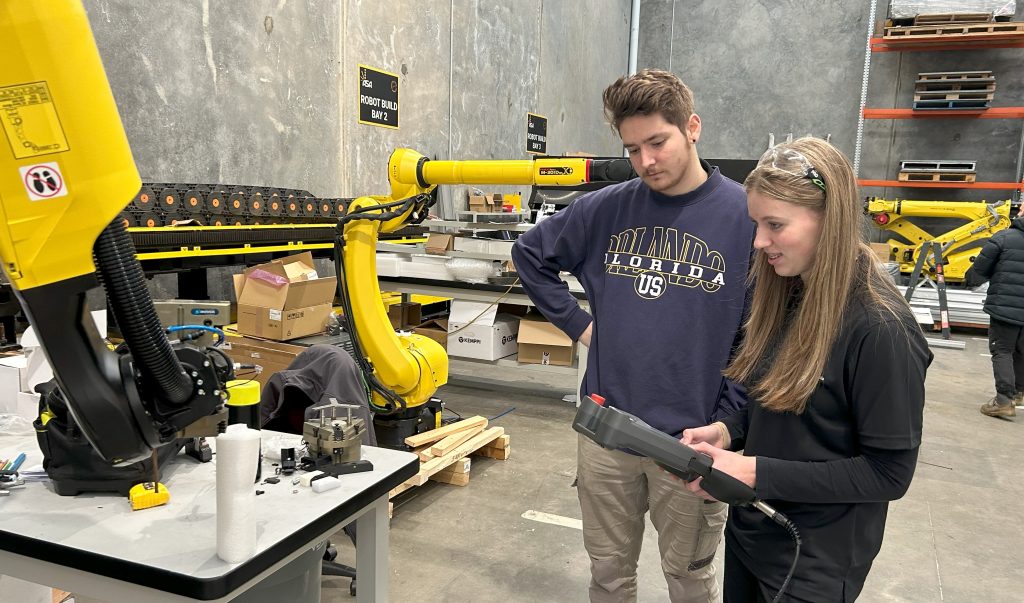
Image credit: automatedsolutions.com.au
You can check out the time difference between the products
Inefficiency in manufacturing doesn’t have to be a major issue. Imagine a worker taking 15 minutes searching for a part, 10 seconds applying the material, then several seconds moving it. On one aspect the difference appears to be insignificant. Repeated thousands of times but those seconds turn into significant production time.
Wasted material is no different. A tiny amount of leftover coating or dispensing material that is multiplied in a production run with a high volume can result in an expense that is significant.
Companies considering robotic automation Australia projects can benefit from examining these small, repeated losses before deciding what equipment they need. ASA’s needs analysis aims to find bottlenecks and problems with quality, waste and other limitations to process that could impact an automation project.
A Robot must be able to integrate the Process Itself
The selection of a robot is a single decision in engineering. Guardings, tools, controls as well as conveyors, sensors and fixtures might also be required. Engineers need to consider reach and payload while also making decisions about how the robot is going to move through its space and interact with everything surrounding it.
ASA provides conceptual development, design of systems and offline programming as part of its method of robotic automation. The digital simulation lets engineers analyze configurations, estimate cycles times, and to test the system prior to making it operating on the floor of a customer’s premises. This is especially useful when space is limited or if new robotics are required to integrate with an established production line.
Paint and Dispensing demonstrates why Replicability is Crucial
Some manufacturing processes illustrate the value of controlled movement especially well. Imagine covering a variety of components. The ability to finish components in a short time is what you want to achieve. The distance, movement speed, and application have to remain controlled at the beginning of the production process until the point of completion.
ASA is a specialist in painting and dispensing solutions across industries including automotive and aerospace. In these areas industrial robotic automation is able to ensure that the same program is repeated while also reducing employee exposure to physically demanding and potentially hazardous processes.
An improved control over the waste material can also contribute to productivity improvements by increasing the quantity of material used.
The installation of the system isn’t enough. It is still necessary to have people to take care of it.
Automation does not completely eliminate the need for expertise in manufacturing. The knowledge needed to manage, maintain and operate the process shift.
Employees should be trained to operate equipment in a safe manner, identify abnormal behavior or malfunctioning components, and complete any necessary maintenance. Production requirements can change, meaning procedures and programs might require adjustments later on.
ASA offers on-site training in safe operation, programming troubleshooting, and electrical and mechanical maintenance. The company provides servicing as well as support for evaluating equipment condition, and addressing wear throughout the lifespan of the equipment.
Capacity is greater than working faster
In Australia, increasing production capacity does not always mean adding workers to repetitive tasks or buying bigger buildings. The better question to ask is whether the current production process can still be improved.
ASA has been designing and integrated automation solutions since 2002. It provides support to the manufacturing industry in Australia as well as international projects. The approach is a combination of needs analysis along with engineering simulation FANUC integration training, and service.
Automation isn’t the main goal. A successful system must give the manufacturer something tangible in yield, more stable production, consistent quality, safer processes, lower waste or additional capacity from the existing factory.